
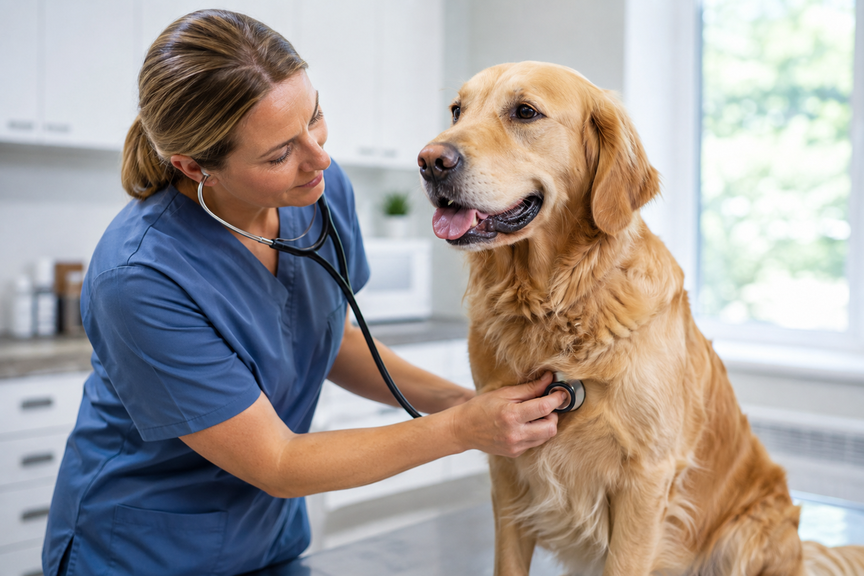
The heart works continuously to circulate oxygen-rich blood throughout your pet’s body. When disease affects the heart or its valves, the cardiovascular system may become less efficient over time. Some pets live for years with heart disease and few outward symptoms, while others eventually develop changes that require medication, monitoring, or specialized care.
Importantly, heart disease and heart failure are not the same thing. A pet can have heart disease without being in heart failure. Because dogs and cats develop different types of heart disease—and may show very different signs—recommendations are individualized to each patient.
Heart Disease in Dogs vs. Cats
Dogs: One of the most common acquired heart diseases in dogs is myxomatous mitral valve disease (MMVD), particularly in older, smaller-breed dogs. Dogs may remain completely comfortable during earlier stages, but as disease progresses, enlargement of the heart or congestive heart failure may develop. Coughing is a common sign in dogs.
Cats: Cats frequently experience heart disease differently than dogs. The most common type is hypertrophic cardiomyopathy (HCM). Cats generally do not cough from heart disease. Instead, hiding, decreased activity, or rapid breathing are more noticeable. Certain cats with heart disease are also at risk for painful blood clots (ATE).
Diagnosis & Management
If a veterinarian detects a murmur or abnormal rhythm, additional testing may be recommended. This can include chest radiographs to evaluate heart size and lungs, an ECG to check electrical rhythm, or an echocardiogram (an ultrasound of the actively beating heart).
Not every pet diagnosed with heart disease immediately needs medication. Treatment depends on the type and stage of disease. For some pets, we may ask you to monitor their resting or sleeping respiratory rate at home to help us identify early fluid accumulation in the lungs.