
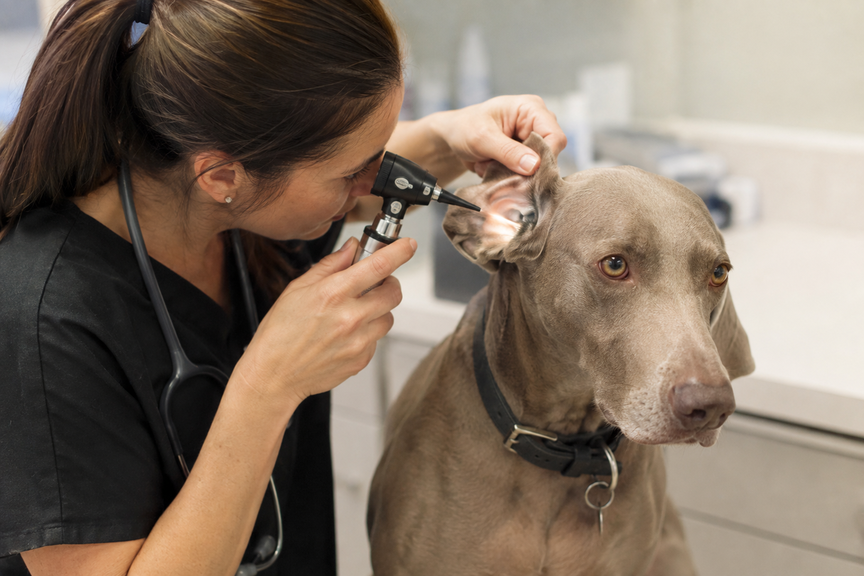
Ear infections are one of the most common reasons pets visit the veterinarian. While many infections respond well to treatment, recurring ear infections often indicate an underlying problem that also needs to be addressed. Simply treating the infection without identifying the cause may lead to repeated flare-ups and ongoing discomfort.
At Pet Wellness Veterinary Center, our goal is to not only treat your pet’s current ear infection but also help determine why it developed in the first place. Identifying underlying causes allows us to develop a treatment plan that helps reduce future infections and keeps your pet comfortable.
Signs Your Pet May Have an Ear Infection
Most ear infections in dogs affect the external ear canal, creating an environment where bacteria, yeast, or both can overgrow. Common signs include:
- Frequent head shaking or scratching at the ears
- Pain when the ears are touched
- Unpleasant odor or brown, yellow, or black discharge
- Red or swollen ear canals
- Holding one ear lower than the other or head tilt
Why Do Ear Infections Happen & How Are They Treated?
Ear infections rarely occur “for no reason.” Common underlying causes include environmental allergies, food allergies, yeast overgrowth, bacterial infections, ear mites, or excess moisture after swimming. Many dogs with recurrent ear infections also have underlying allergies.
Treatment depends on the underlying cause. Recommendations may include prescription ear medications, professional ear cleaning, treatment for bacteria or yeast, and allergy management. Because every infection is different, using leftover medication from a previous infection is not recommended.
Frequently Asked Questions
- Can I clean my pet’s ears at home? Yes—but only with products recommended by a veterinarian.
- Why does my dog keep getting ear infections? Recurring ear infections often indicate an underlying problem such as allergies, chronic inflammation, or changes within the ear canal. Identifying the underlying cause is important for long-term management.
- Do ear infections go away on their own? Most do not. Without appropriate treatment, infections can worsen and may spread deeper into the ear, causing increased pain and, in severe cases, hearing or balance problems.